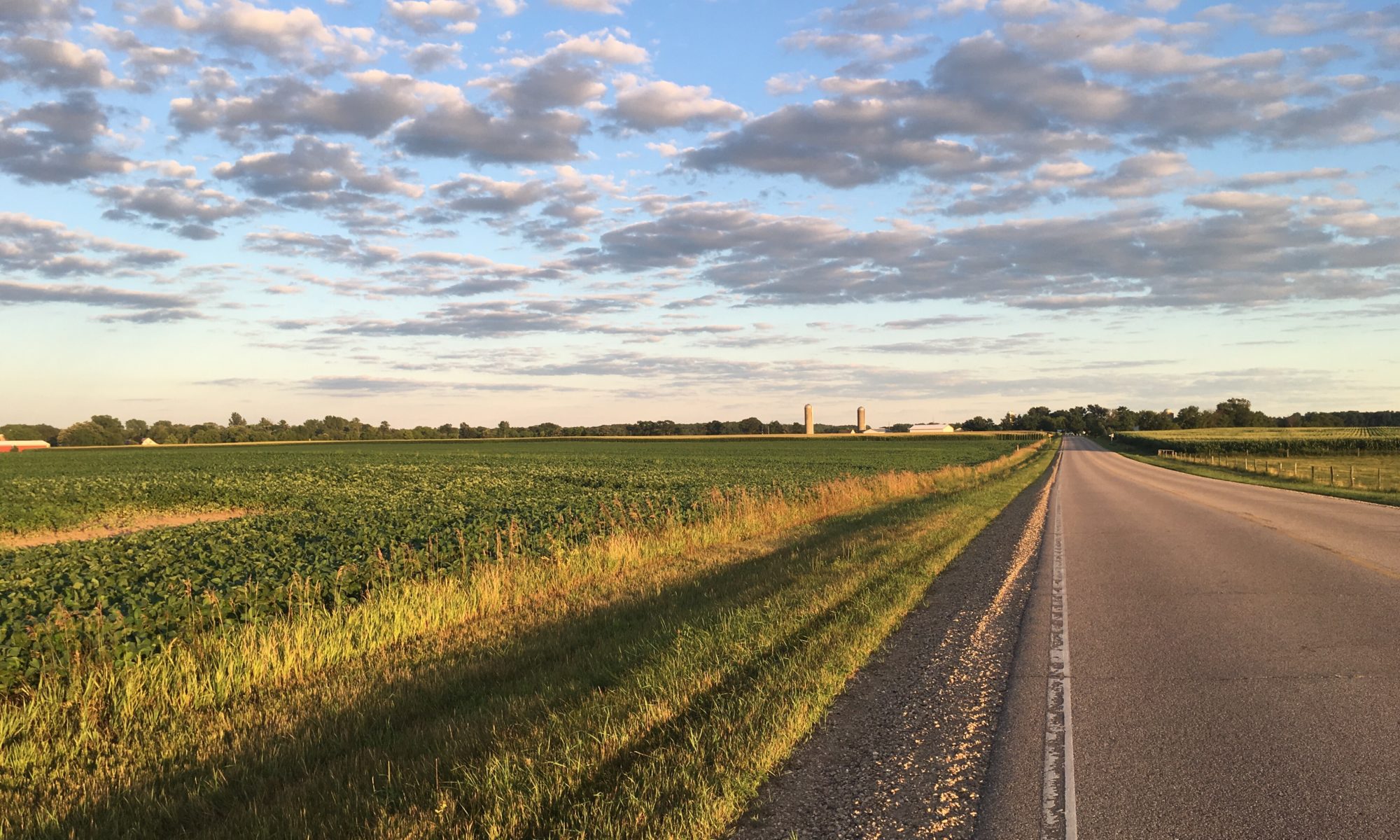
I might have cried, but for the moon and for the thought of you tracing the places we once had been, the person I had promised you I’d be.
~ from Journey: a traveler’s notes by William Sulit and Beth Kephart
On the flight home to Texas, you realize just how long it’s been. Since you’ve flown. Since you’ve seen your father, your sisters, your mother’s sister, those who know you best. Of course, it feels like forever, but it’s only been two years. Still, you are not the same person you were when they saw you last. When you last saw them.
Of course, there’s the pandemic, where you’ve been forced to slow down and take in more of what was right in front of you. But in the last two years, you lost your footing in a few places, got back up bruised, fractured, heart worn and weary. The bruises heal. The fractures dredge up an old pain you thought you had put to rest. Where weariness sets in is during the weeks of stepping gingerly, barely breathing. There was the month of anger. Of course, anger. And to measure it by a month isn’t entirely correct; anger, like grief, comes in waves and is marked by varied lengths of intensity.
This pandemic was nothing.
When the weather warms and the restrictions ease, you open the door, step outside. The yard is beat up, in front and in back, and full of dandelions. You gather your spade buried somewhere deep in the garage and begin carving out each one that has taken root, like you might cut around a festering sore. You pray for forgiveness. Dandelions, after all, have merit. This simple act of attention becomes a meditation so, of course, you stay outside longer than you had planned. You dream about summer, schedule a long visit with family, buy the plane tickets.
You are greeted at the airport by your sister who looks just like your mother, so much so that your heart skips and you whisper, Thank you.
She chauffeurs you for miles to each cornerstone (because there is more than one). It’s strange to feel lost in the place where you grew up. The roads have changed – names and directions, are still changing. But when you take the wheel, you take your time and drive with the windows down.
The rush of the Texas heat, the sound of your cousin’s laughter, the spirit of your kids and the joy as they tap into your roots (why have you kept them away for so long?), the wide-open spaces, your father’s tender heart, the words of your aunt who says, Your mother would be proud.
“…bones could sing, she knew, and if she drew them in pictures, she would give them back their voices.” ~ from Jillian in the Borderlands by Beth Alvarado
One of my favorite books is Margaret Atwood’s Negotiating with the Dead: a writer on writing, in which she writes a page and a half of reasons given from writers about why they do what they do, why they are driven to put one kind of story or another to the page. To name just a few: To record the world as it is. To set down the past before it is all forgotten. To produce order out of chaos. To express the unexpressed life of the masses.
To give voice to the voiceless.
Beth Alvarado accomplishes each of these things in her new collection of linked stories, Jillian in the Borderlands (Black Lawrence Press, 2020). The main character throughout this book is Jillian Guzmán, whom we first meet as a young girl and get to know as she grows older and becomes a mother. Jillian is mute, but she can hear. And she can see. She listens, she observes, she sees beyond and behind, she is a finder of lost souls, she draws images of the dead. And in her quiet way, she give voice to the voiceless.
With the ecstatic knowledge of an ancient curandera and the playful, storytelling prowess of a child, Alvarado travels great distances, bears witness, presages problems, and intuits solutions. She isn’t just at the forefront of white writers writing about race, she’s at the forefront of people writing about what it means to be human and how we might survive our own dangerous shortcomings.
~ Jennifer Tseng, author of Mayumi and the Sea of Happiness
I’m honored to host Beth, who shares a little about her book, and to offer a giveaway. ENTER the giveaway by Wednesday, January 20th, for a chance to win a copy of Jillian in the Borderlands. Now, welcome Beth Alvarado!
Christi Craig (CC): Jillian in the Borderlands is very much a “recital of events,” full of reports and revelation. At one point, we read this about Jillian’s mother, Angie: She opened her laptop. Did she believe in the power of the word? That was the question. But what else could she do? Tending one’s own garden was not enough. This is a question we writers face as well. Did you experience this feeling when you sat down to write this book of linked stories? When did you know that, no matter, you must write this book?
Beth Alvarado (BA): I like that phrase: “full of reports and revelation,” because I feel like it somehow describes my aspirations for this book! I’m going to use it somewhere. Thank you.
When I started the first tale, in 2010, before I knew this would become a book, I found myself writing about the anxieties I’d had as a mother when my children were young. In “The Dead Child Bride,” Angie is concerned with keeping her daughter safe in a rather rough neighborhood.
In a way, I believed my writing could “witness” the dangers of the world that young girls had to navigate and, further, that witnessing could help bring about change so, although I didn’t want my work to be didactic, I did believe in writing as both witness and action. This came partly from years of teaching the work of amazing writers who also were activists, like Grace Paley, Carolyn Forché, and Toni Morrison, and from the belief that stories can reach, and therefore change, hearts and minds.
By the time I wrote the last story “Los Niños Perdidos” where Angie wonders about the power of the word and realizes that being able to tend “one’s own garden” has always been a kind of privilege, children were being separated from their parents at the border. I was becoming a little disillusioned. Was it enough to write? Enough to teach? And what kind of writing could make a difference? That’s what I was feeling and, of course, what Angie was facing as she opened her laptop.
By that point the tales were becoming increasingly political but also increasingly magical, and I wondered if I should tone them down but, instead, I decided just to follow the characters. Magical realism, at least in South America, comes out of times of political duress where the writer feels the need to transform reality in order to truthfully reveal it. Of course, in order to do that effectively—so that the magic feels authentic, so that it rises from the story—the writer has to believe that magic is possible. In Jillian in the Borderlands, the magical elements all come from the characters, mostly from Jillian, but also from Juana of God and Junie the Channeling Chihuahua, and from Charlie-Carlos and his mother, Gloria, and from Jillian’s father. Do I believe that people’s spiritual and emotional impulses can transform reality? I guess I do. There are people whose effect on the world has been mythic. Really, what I think we’re talking about, here, is even bigger than intention. We’re talking about the philosophy and worldview of the writer, both of which inform intention. But, as a fiction writer, I believe you have to be willing to let your intentions evolve. You sometimes have to let go of intention and just follow the story, at least as you’re writing it, or it will feel contrived—so you are in a conundrum in a way, between the tensions of purpose and process. Or between the tensions of “reports and revelations”? Elizabeth Bowen said of the novel something like, the ending must seem at once “both surprising and inevitable.” I hope I achieved that. I was surprised by many things in these stories and feel like I somehow tapped into something other-worldly as I was writing them.
CC: Jillian, is such a unique character. Since birth, she has never spoken, but she makes herself known in other ways: in her sublime personality, in her art–drawing images of the dead and maps for the living, and in her gift of listening so well that she can easily find the spirits of the dead and almost dead around her. She’s a complex character with a profound presence, even as she remains silent. How did Jillian come to life for you? Did her complexity grow as you moved further into the writing process?
BA: There is so much that is pure serendipity about this book. “The Dead Child Bride,” the first tale, began as an experiment. I wondered if I could imitate four authors in one story—which gave rise to the structure: with four different “voices,” I would need four narrators and therefore a segmented story. The first author was Flannery O’Connor and I picked elements of “The Life You Save Might Be Your Own,” maybe because it was darkly comical. In that story a grandmother is standing on her porch watching a man approach; next to her is her deaf-mute granddaughter. The grandmother “becomes” Angie; the man, a neighbor; and the granddaughter, a daughter who happens to be “mute”—but I wanted the daughter to have a rich interior life. I wanted to push back against the way O’Connor portrayed the granddaughter as deficient and powerless. And I wanted to see through the daughter’s eyes—which we never get in O’Connor’s story—because I love the way that a child’s naïve point of view can reveal things that we, as adults, have been conditioned not to see.
Another of the writers I was imitating was George Saunders—who, in his stories, does exactly that, gives us another way of seeing—and so in the first segment from Jillian’s point of view, I tried to imitate the contemporary, surreal, and humorous qualities I saw in his work. Of course, when you imitate you never accurately replicate the original—nor is that the goal—but you instead create something of a hybrid between the original and your own voice or vision. And, always, if an imitation is going to be successful, it has to take on a life of its own. If these things I borrowed hadn’t worked, I would have changed them or never continued to create more tales—but the characters kept coming back to me and the constraints ended up being generative and when they were constraining, I had to invent ways around them.
Anyway, that’s how Jillian was “born.” It was an interesting challenge, making her mute, because one way you develop a character and a character’s relationship to others is through dialog, but I had taken that tool out of the box in her case. She can hear her mother—and she can ignore her—but Angie has to interpret Jillian’s drawings to understand her and she can never be sure if she does so accurately. When Jillian’s father shows up in “Jillian Speaks,” he seems to be able to hear her; at least he “answers” her thoughts. We also are led to assume she gets some of these qualities—hearing others’ thoughts, seeing the dead, intuition—from him or his side of the family.
As Jillian grew older, she did become more complicated. That’s partly because it’s true of all of us, but it’s also a function of the writing. With each tale, I would think, well, okay what other “gift” can Jillian have? I wanted her to have agency, first of all, as well as a “voice.” My idea was that, because she was mute, the “universe” had compensated by giving her other gifts—so she had the gift of drawing so she could express herself. She simply “knew” things about history although it was always an incomplete knowledge; she could also foresee things, but again, that was incomplete, she could only see glimpses; she had the gift of seeing and/or hearing the dead but not necessarily understanding them. I made limits to her “powers” because that created conflicts. In my mind, her gifts are all metaphors for qualities that some people have or develop.
The gift of hearing others is empathy. “Foreseeing” the future might be intuition but it also could just be an intelligent reading of the world. I guess the main thing is: I had made her voiceless and therefore, because she is created in language, I had made her helpless. How could I remedy that?
BA: I started out as a fiction writer—my MFA was in fiction—but I remember having a hard time with “plot” because I interpreted it to mean that the writer had a plan. I never had a plan and, you know, I can’t even follow a recipe. But then I read a book on narrative theory that said that the short story was really more like a poem than a novel because it was one moment in time that suggested the life around it whereas the novel had to move through time. It was like the difference between the photograph and a film. True or not, this was really liberating for me as a writer and applies to my stories and essays and even to my memoir Anthropologies, which is actually a series of photographic moments that, together, build a kind of narrative arc.
You can see a variation on this structure in Jillian in the Borderlands: each tale is composed of a series of segments, each narrated by a different character, although characters recur in order to provide over-all coherence. I think this technique also increases the narrative tension, but in order for it to work—and I learned this from writing Anthropologies—the writer has to become aware of the way her mind is moving associatively. Her mind is making leaps from moment to moment. How is it doing that? And how can she help the reader’s mind do that? I wanted to give the reader a feeling that she is omniscient, knows more than any one of the characters knows, and so can put together a narrative.
I also do this because I want the work to include multiple perspectives—which I did even in the memoir by including other people’s stories and dreams and memories. In Jillian in the Borderlands, I’ve compared it to being at a cross-border dinner party where people are telling their stories, sometimes in English, sometimes in Spanish. From the accrual of details, the listener puts together a narrative, even if there are gaps or contradictions.
While I didn’t set out to do that, once I’d done it, I realized it was a very organic form for a book set in the borderlands.
I’ve heard it said that Style = Vision and, in this case, this narrative technique does reflect my philosophy and political beliefs. I see our lives as interwoven and our “reality” as composed of many points of view. Even in the first book of stories, Not a Matter of Love, I use shifting third person point of view most of the time. My essays are more self-contained, of course, but often include other people’s perspectives. I think this comes from having married into my late husband’s family when I was only nineteen. He was Mexican American and when we were first married, we lived with his family, eight younger brothers and sisters, on the “Mexican and Indian” side of town. My monolingualism in a multi-lingual neighborhood is a kind of metaphor. Suddenly I understood that I was coming from a very limited and very privileged point of view, that my family’s understanding of history was only one understanding, and that there were whole other ways of being the world. It was transformative and liberating. I will be forever grateful for that experience.
CC: Here we are, 2021 (finally!). In the spirit of Jillian, what is your vision for the new year?
BA: I am hopeful, both because of the election and the vaccine. I think we’ve learned that, even at its best, our system is not yet equitable, inclusive, or sustainable. When we falter, the rest of the world also suffers. We need to make changes. Of course, right after I wrote this, I took the dog for a walk and got a ping on my phone: Trump’s followers had become a mob and they broke into the Capitol. So, our hard lessons will continue, evidently but, in the spirit of Jillian, I will be hopeful. We can value and take care of one another. We can band together and tend to the garden that is the earth. We need to listen deeply and be creative in order for transformation to happen. Women, in Jillian’s vision, can lead the way to healing.
CC: What are you reading these days?
BA: I am reading—and rereading—a whole bunch of essay collections because I am writing a new collection and because I am trying to revise a review essay I wrote on recent collections. So this is the list: Aisha Sabatini Sloan’s Dreaming of Ramadi in Detroit, Sejal Shah’s This is One Way to Dance, Lacy M. Johnson’s The Reckonings, Eula Biss’s Notes from No Man’s Land, Esme Weijun Wang’s The Collected Schizophrenias, andT. Kira Madden’s Long Live the Tribe of Fatherless Girls. Rereading is one of the greatest joys of being a writer, I think, because it’s how you teach yourself to take your work in new directions.
Jillian in the Borderlands: A Cycle of Rather Dark Tales is Beth Alvarado’s fourth book. She has written extensively about her experiences as a Euro-American woman marrying into a Mexican-American family and spent most of her life in Arizona. Her essay collection Anxious Attachments, an Oregon Book Award winner, was long-listed for the PEN/Diamonstein-Spielvogel Art of the Essay Award. Beth is also the author of Anthropologies: A FamilyMemoir, and the short story collection Not a Matter of Love, which won the Many Voices Project Award. She teaches for OSU-Cascades Low Residency MFA Program.
DON’T FORGET: Enter the Book Giveaway for a chance to win a copy of Jillian in the Borderlands!
In this Sunday Series, you’ll meet writers new and seasoned as they share what inspires them to put #PenToPaper. This week, welcome Donna Miscolta, who writes on finding her voice.
I once wrote an essay called “Can’t You Talk, Girl?” They were the words said to me when I was ten. Said is not quite the right word. Hurled is not quite it either. Spat is close. There was something meant to denigrate and discard not just in the words – the word girl signaling I had no name to humanize me – but in the tone, which suggested girl was a category I might not even deserve.
I was extremely shy as a kid, sometimes almost pathologically so, sweating, trembling in social situations, wishing to flee or magically disappear from them. And yet, in my imagination I thought I could be different if only given the right circumstances. I could be like other kids if, for example, my parents allowed me to spend a week away at summer camp whose brochures showed happy kids bonded in friendship while hiking, singing around a campfire, and making art from pine cones. Then I could be like Trixie Belden, outdoorsy, tomboyish, and fearless, maybe able to solve the mystery of how not to be shy.
All of that existed in my imagination. In real life, one afternoon at the crafts table during that one long week, three attractive blond kids laughed and talked among themselves while I sat, awkward and mute, polishing my little piece of wood to make an amulet, my camp souvenir that would be a reminder of my week of camp adventure. Those kids fit the Trixie Belden profile – blond, fearless, their wholesomeness on display in well-fitting shorts and tanks. I was skinny and brown. I wore glasses and braces. My clothes were cheap and hung loosely on me. I was invisible to the blond kids, until a weird sound escaped from my throat. It was meant to be a laugh in appreciation of a joke one of the blond children told, but because my vocal cords had been dormant during crafts hour, they emitted a strangled bark, like some wounded stray.
When one of the blonde ponytailed girls narrowed her eyes at me and jeered, “Can’t you talk, girl?” all I did was nod that, yes, I could, withholding all proof.
I didn’t know then that I would one day be a writer. At least, I didn’t know it consciously. I like to think the notion circulated in my body’s cytoplasm, trapped in some membrane for safekeeping, that it had always been a part of me, finally to be released in mid-life.
Here, in part, is the proof that I can indeed talk.
DONNA MISCOLTA’s third book of fiction Living Color: Angie Rubio Stories, about lessons a young Mexican American girl learns in a world that favors neither her race nor gender, was published by Jaded Ibis Press in September 2020. Her story collection Hola and Goodbye, winner of the Doris Bakwin Award for Writing by a Woman and published by Carolina Wren Press (2016), won an Independent Publishers Award for Best Regional Fiction and an International Latino Book Award for Best Latino Focused Fiction.
She’s also the author of the novel When the de la Cruz Family Danced from Signal 8 Press (2011), which poet Rick Barot called “intricate, tender, and elegantly written – a necessary novel for our times.” Recent essays appear in pif, Los Angeles Review, and the anthology Alone Together: Love, Grief, and Comfort in the Time of COVID-19. Find her at donnamiscolta.com.
On Thursday, October 8th, @ 7pm Central, join me at Hidden Timber Books to hear Donna Miscolta read from her new book, Living Color: Angie Rubio Stories.