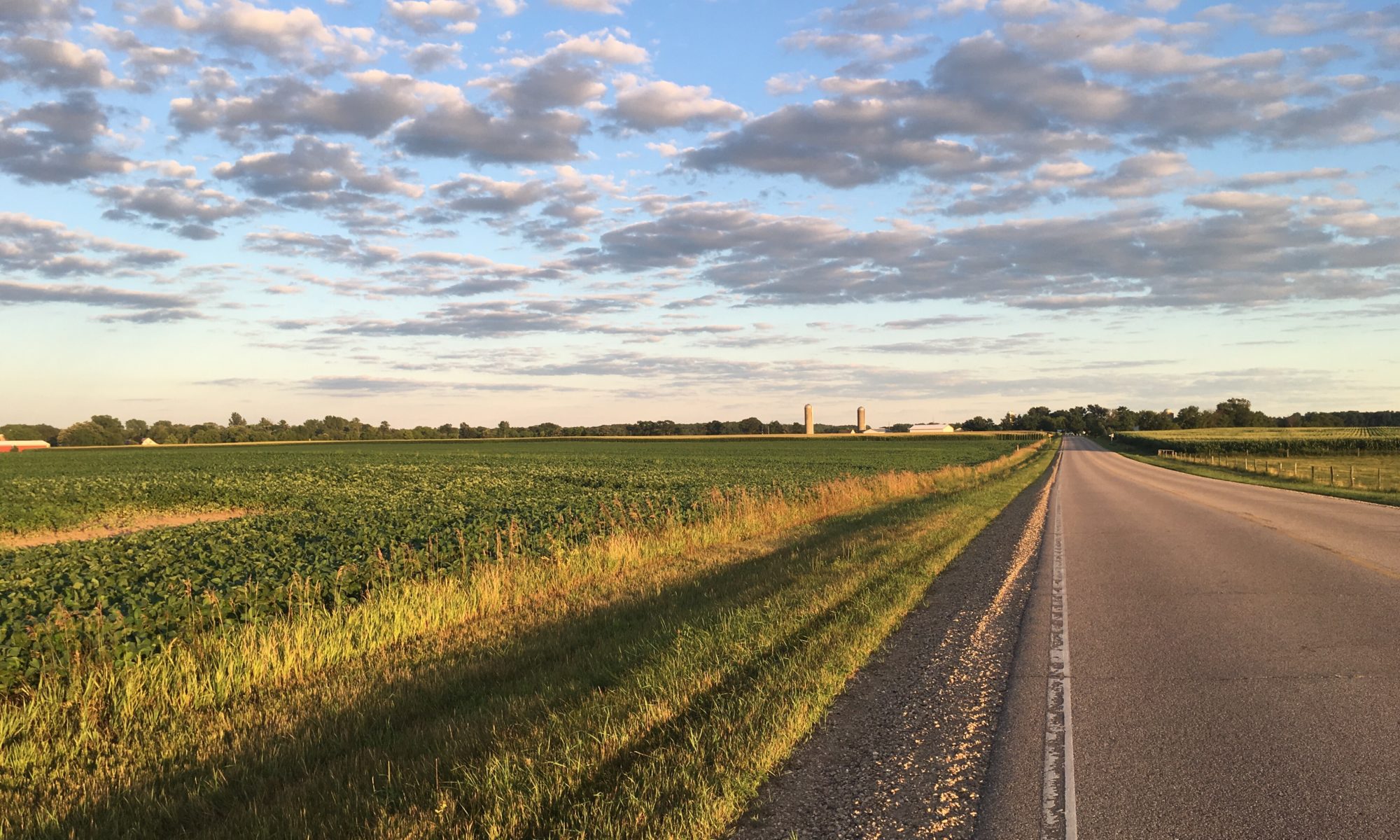

“There are stories, unknown stories that roll across the salty waves of the open sea. Unknown stories contained in the hulls of run-down ships carrying enslaved human beings. And there are known stories of my Indian ancestors arriving on Jamaican shores. I am a story, and I cling to the known parts because maybe in that act I remember and also remind others how much has been taken, erased, and lost. I am here….”
~ Patrice Gopo, All the Colors We Will See
“I am a story, and I cling to the known parts….” I love that line from Patrice Gopo’s new collection of essays, All the Colors We Will See. Stories play such important roles in our lives. They help us remember; they connect us, teach us, inspire us. Those connections are not always ties of familiarity, but they are pathways to conversation. The lessons we learn by reading about others’ experiences translates into new understandings of our own. When we ask questions, when we listen, we find inspiration. Through stories, we transcend.
In All the Colors We Will See, Gopo takes readers on a journey to discover new meanings FROM her past, new pathways to understanding her future, a journey of awareness and acceptance. We read about Jamaican immigrants living in Alaska, a black family attending a mostly-white church in North Carolina, and the definition of being black–is it race? ethnicity? experience?
I’m honored to host Patrice to talk about her new book and excited to offer a giveaway! Enter by Tuesday, January 22nd, for a chance to win a copy of All the Colors We Will See.
Now, welcome Patrice Gopo!
Christi Craig (CC): You’ve written a beautiful collection of essays about place, identity, being seen, and finding your voice. Is there a particular piece in All the Colors We Will See from which the rest of the book blossomed?

Patrice Gopo (PG): Christi, thank you so much for those kind words. I love the way you express the collection as also about being seen and finding voice.
I think those are accurate descriptors and remind me of one of the first essays I ever drafted, “Caught in the Year of OJ Simpson and Huckleberry Finn.” Being seen and finding voice (or not finding voice) were definite themes in that piece.
I wouldn’t say the collection as a whole blossomed from the Huck Finn essay, but this was one of the first essays I ever wrote that would go on to become part of the collection. An early draft of the Huck Finn essay and an early draft of another essay set the stage for the themes that would continue to resurface in my work. Themes around belonging and identity formation, around race and movement of people. These themes would become a sort of compass pointing me to a reality that there existed a much larger work, a collection.
CC: In “A Note to a College Classmate” you write about reading Ellison’s Invisible Man and suddenly being thrown into a discussion where you become the voice of many; in “Marching Toward Zion” you sort through experience and feelings around attending a white church, your need to belong versus your desire to “linger at the edge” in order to stay true to self. You ask, “How can we keep from becoming worn?” Your writing is not only full of insight into your experience but pulls the reader into moments of her own self-reflection. What is one thing you hope readers will carry away with them as they reach the last pages your book?
PG: Ever since All the Colors We Will See entered the world, I regularly receive lovely notes from people who share how much this book meant to them. Some of these people share much overlap with me in terms of personal experience and some don’t. What I find interesting, though, is that at some level, in some way, people connect with the words I write. For people who connect at a deep level—perhaps they are also a person of color, perhaps they are the child of immigrants—my hope is that they will finish this book with a sense of affirmation that their story matters out there in the world, that there is space for them to fully be who they are. And for people who might connect with some elements of my story but also read about a world or life distant from their own, I hope they will carry with them a new perspective, a new way of looking at the world.

CC: In your talk “Our Stories Matter: Seeing Ourselves, Seeing Others, and Seeing Our God” (on Soundcloud), you say:
The specificity of our stories matters . . . . We no longer reduce people to the binary of same or different. Instead, we begin to see people for the fullness of who they are and who God created them to be . . . . We can listen and we can learn. And we can be transformed.
How has writing this book transformed you and your work as author and speaker?
PG: Thanks so much for listening to that talk! Writing has been instrumental in transforming my work as an author and speaker. I’m passionate about words and about sharing my story and adding my experience to our current conversations about race and immigration. However, in the process of writing and sharing my story, I discovered I also care about the way sharing personal stories can help shift people’s mindsets in pursuit of healing in society and in pursuit of a more equitable world.
I love helping people see that sharing their stories in the world matters too—even if they never write a personal essay or write a book like I did. That’s why in conjunction with my own writing, I’m actively engaged with communicating the message of the power of personal storytelling. Since my book entered the world, I’ve had the immense privilege of sharing this truth in all types of environments: corporate settings, libraries, nonprofit organizations, churches, conferences, public discussions, etc. I absolutely delight in the way people engage with the reality that they can identify their stories and they can share them too.
CC: What are you reading these days?
PG: I’m one who tends to keep a number of books in the stack beside my bed, reading chapters here, poems there. I just finished Michelle Obama’s wonderful memoir. I mentioned to someone that in Michelle’s book, she offers so many ways in which a reader might connect with her experience. Invitations to connect and opportunities to also see something different. I also just finished Radium Girls by Kate Moore. A fascinating, tragic, and inspiring book about a topic I knew nothing about until I started reading. I’m currently reading Create Dangerously: the Immigrant Artist at Work by Edwidge Danticat. I’m intrigued with her words and the way I feel some points of connection as the daughter of immigrants but then also there’s the invitation to see something more because I am the daughter of immigrants to the United States and not an immigrant to the United States myself. And the poetry collection in my currently-reading stack is Dead on Arrival by Jaki Shelton Green.
And one more, I just learned about LaTanya McQueen’s new essay collection, And It Begins Like This. From what I gather, she also explores themes around race and belonging, so I’m anxious to dive into this one.
CC: As you move into a new year of writing, what do you look forward to most?
PG: Honestly, I’m looking forward to the unfolding of what might be next. It was a very busy autumn for me with the launch of All the Colors We Will See. Now as life is settling into perhaps the new normal, I’m anticipating a bit more rest and bit more time for my mind to start considering my next creative endeavor. I’m not yet sure what that might be, but I do trust the process and believe what’s next will unfold as and when it should. In the meantime, I’m excited about a few ideas I have to empower others to share their stories that I’ll be rolling out probably in February. I’m also thrilled to have written the curriculum for “Beautiful Truth,” an exciting program here in Charlotte. If you’d like to hear more about my plans to help others identify and share their stories, you can subscribe to my newsletter HERE.
Patrice Gopo is the author of All the Colors We Will See, an essay collection about race, immigration, and belonging. She is the recipient of a North Carolina Arts Council Literature Fellowship, and her book is a Fall 2018 Barnes & Noble Discover Great New Writers selection. Patrice lives with her family in North Carolina. Follow her on Facebook, Twitter, and Instagram.
![[image] stack of reading & writing materials, journal, Tell It Slant book, Pretend I'm Dead novel, Whale Song book, Bibiophile box of stationary, all topped with a tiny RC Allen typewriter](https://i1.wp.com/christicraig.com/wp-content/uploads/2019/01/IMG_2100.jpg?fit=640%2C853)

