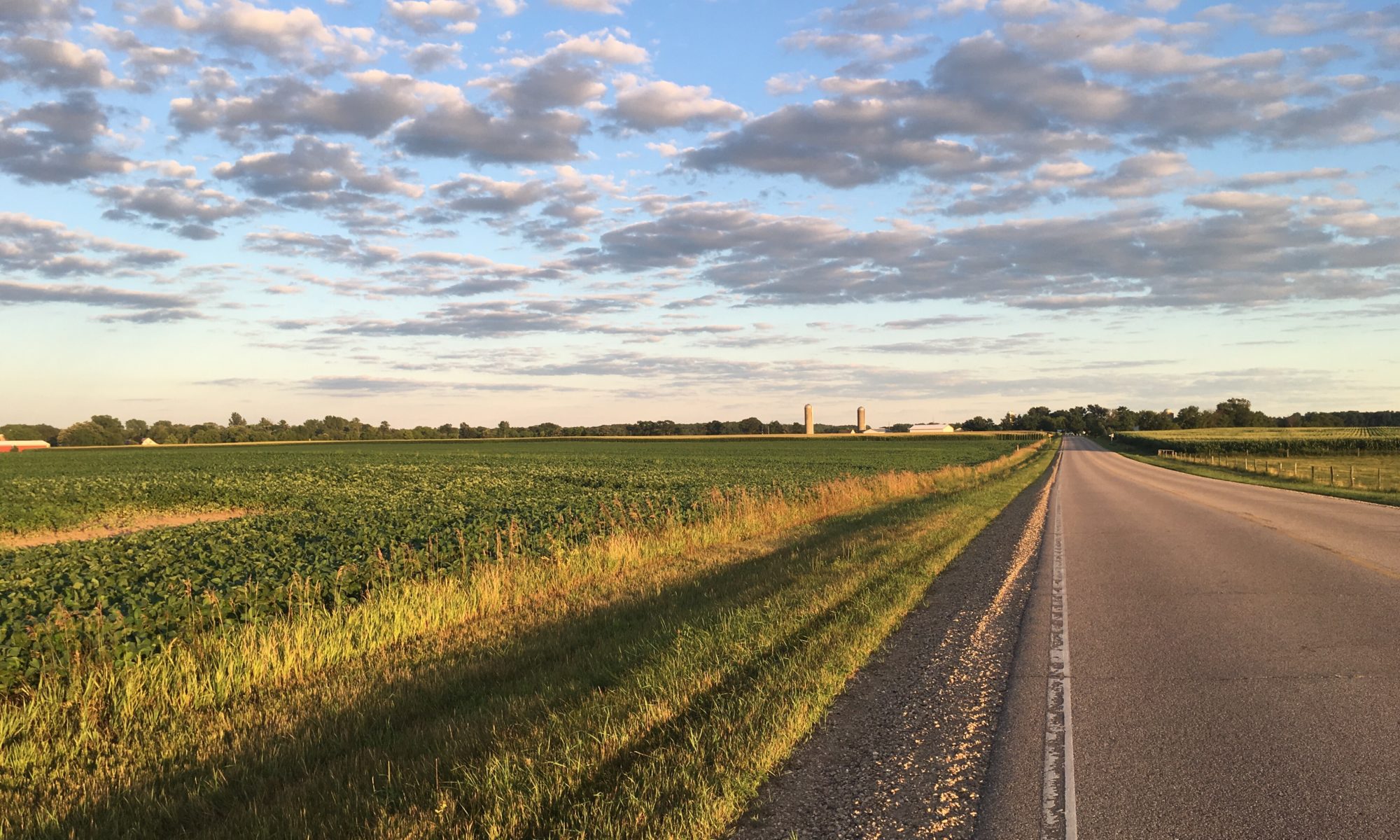
Ántonia had always been one to leave images in the mind that did not fade…. ~ from My Ántonia
When I read the quote above, I immediately thought of the Writers at Harwood Place. Most of them are 90 years old or older. They are sharp, committed to the group, and their stories are full of memories and images that settle in hearts and minds.
Last weekend, my co-teacher Maura Fitzgerald and I hosted the Harwood Place Annual Writers Showcase (our 7th year!). This event always draws a crowd; it’s a highlight for me, Maura, these writers, and the friends and family who attend.
We met before Christmas to practice reading the pieces everyone wanted to share at the podium, and a few of them teared up as they read. The stories they share bring back vivid memories and also serve to honor people in the past who shaped and molded one or another of the writers around the table, people who left images in minds that do not easily fade. Each time I sit at the table, I am honored to be a part of this group.
(From left to right) Row 1: Mary, Valerie, Ruth. Row 2: Maura, Geri, Katy, Toni, Betty, Carolou, Warren, and me.
Poet Katy Phillips visited our class a few months ago as a guest teacher and created a poem based on a writing exercise she ran with the group. She read her poem, “Where We Are From,”* at the beginning of our event as an introduction to these amazing men and women.
The day of the reading we had one writer missing, Chuck Moritz (right), a long-time member of the group and a pleasure to hear from each month. Chuck was unable to attend due to health reasons.
Knowing he would have been there otherwise, we left a chair up front for him and read his poem in honor of him, something he wrote several years ago to his mother on her 100th birthday. Chuck grew up during the Dust Bowl, and from all I heard and read about his mother, she was a rock in times of uncertainty and grief.
I’m so glad we were able to share his poem with the audience at Harwood Place that day. In the evening, I received an unexpected phone call that Chuck had passed away. Such a wonderful and generous man–in stories, in conversation, in spirit. We shared a special bond, too, as he and I were born on the same day, 46 years apart. I can’t begin to explain the energy he brought to the group and how much he will be missed.
*”Where We Are From” is based on a great exercise for gathering bits and pieces from family or friends around a table during a holiday, or any time of year really.
We came from no one and we were attached to no one. I could make that sound like a bad thing but I have worn my rootlessness like a custom-made, one-of-a-kind, jewel-encrusted cloak adorned with shiny medals that read “grandparent-less,” “aunt-less,” “uncle-less,” “cousin-less.” I say I have a gypsy soul. I like the sound of that, all wild and romantic. But a gypsy probably does not crave to fill in all the blank spaces.
~ from This Never Happened
Years after I left home, I began to see my life as a puzzle with missing pieces. So I started asking questions. I read my mother’s journals after she died. I filled the pages of my own journals. I spent one November staying up late every night and, by the light of the computer screen, poured out word after word in an effort to write a novel, which turned out to be a cathartic release of fragments from my own story. I am still writing from bits of memory and experience–I have plenty to work with–and am recognizing patterns, making connections, filling in the gaps.
But what does a writer do when memories feel like grains of sand, small and slippery, and fragments are full of holes more than they are solid forms?
Liz Scott faces this question in her new memoir, This Never Happened (University of Hell Press, 2019). Growing up in a family where her parents kept their past hidden and vague, Scott turns to photos and letters to try and bridge one experience to another, to search for answers and for truth.
Deborah Reed (The Days When Birds Come Back) calls Scott’s book an “honest look at what it means to have compassion, however flawed, for the people who hurt us, and for whom we can never truly know or understand.” This Never Happened is a compelling and unique memoir that reads as a collection of tiny essays and leaves a lasting imprint.
I’m thrilled to host Liz Scott to talk about her memoir and about writing. Plus, there’s a giveaway! Enter by Tuesday, January 28th, to win a copy of This Never Happened, one of my favorite reads in the last few months. Now, welcome Liz!
Christi Craig (CC): Your memoir is a collection of very short chapters, with a few longer ones mixed in and some reading in just one sentence. This structure mirrors the way we sometimes process memories we question or difficult experiences we hesitate to revisit—in bits and pieces. Did that structure unfold naturally as you began writing or was it a decision made in revisions?
Liz Scott (LS): I’m so glad you felt that the form mirrored the way memory works. I did not write this book in a linear way or, indeed, in the way the chapters ultimately were arranged. Something would come to me—a memory, an image, a feeling I wanted to explore—and I would write that piece.
It wasn’t until I was done that I began the process of ordering the chapters. And I totally agree that memory comes in unpredictable, not-very-orderly ways. I do not think that’s limited to difficult or confusing memories though. In my experience, a memory can be triggered by so many different things and sometimes seemingly out of nowhere.
CC: Several passages in your book stand out to me, this one in particular,
“I’ve come to believe that all of this—the facts about your ancestors, the truth about your family story, the reliable connections—are what create ballast in life.”
So much of writing is about examining and understanding ourselves and the world around us. How did putting your story to the page change you as a writer or provide more balance in your life?
LS: The impact on me as a writer is easier to answer: in my book I talk about how for most of my life I’ve had an almost phobic reaction to the idea of being a writer. I had spent my early life wanting NOT to be my mother. She was a writer and had an excessive need to be famous as a writer. So I came to writing tentatively and with not much confidence. It’s still hard for me to claim the identity of ‘writer’ but creating something that a publisher wanted and people are buying has given me so much more confidence.
I think the impact on me personally is more cogent though. I’ve had years of my own therapy and as a psychologist have thought deeply about family dynamics and how our emotional lives work. I didn’t even start writing this book until I was in my late 60s so I had a more than average understanding of my own psychology. I did not embark on a project intended to be cathartic or therapeutic. Imagine my surprise when I finished and realized that in writing my book I had indeed been changed. And it has to do with this idea of ballast.
As I talk about in the book, given the strange and particular features of my family, I grew up feeling quite untethered, kind of floating from one thing to the next without ballast. When I wrote the last chapter, I realized I felt more connected to all my relatives and ancestors, none of whom I had ever met. I saw myself in that long line, the chain of people whose DNA I share and I felt much more anchored than I’d ever felt before.
CC: In your essay, “Why We Need Memoirs,” you say, “My old writing teacher always stressed the importance of fully digesting material—events from one’s life, difficult experiences, etc.—in order to tell a good story….” Distance, I would add, makes it possible to tell that story in the first place. Was there ever a time in writing your book when you took a necessary break, and if so, how did you find the time/energy/courage to return to the work?
LS: I agree. Without that distance—especially with memoir—you run the risk of writing what sounds more like a diary. That kind of undigested material can lack perspective and frankly be cloying. As I said, I had considerable distance from my childhood given how old I was when I started writing and also had a significant degree of psychological distance given my personal work and my profession. Also, I did not start writing until after both of my parents had died which is another kind of distance I think.
In terms of necessary breaks, oh yes! But for me I think it has to do more with the fact that I have a very short attention span. I do all my writing in coffee shops and find that I can sit and write for maybe an hour at a time before I want to move on to something else. It has less to do with time/energy/courage than my tendency to flit from one thing to the next. I will say though that since I was determined to be as open and honest and unflinching as possible, I put a post-it note on my laptop that said, “Be Brave”. So anytime there was a choice to demure, I marshalled my courage. Personally, I did not see the point in writing this book without being as baldly honest as possible.
CC: What are you reading these days?
LS: I always move between a couple of books at a time—that short attention span thing. I just started Trust Exercise by Susan Choi which won last year’s National Book Award. I’m also reading All This Could be Yours by Jami Attenberg. And I torture myself by obsessively consuming the New York Times, Washington Post and about a zillion political blogs.
CC: What do you hope 2020 holds for you as a writer?
LS: I just published an essay in The Big Smoke called Post-Partum Publication. It’s about this interesting, particular and often challenging time in the months after a book launch. In it I talk about what I would call the active life of a book—the writing, the work to find a publisher, the launch, the readings and publicity. My book felt so alive during all of those phases and I was so emotionally attached to all parts of the process that I did not have much brain space to start another project. I have had the germ of an idea way far back in my brain and now that I feel the particular aliveness of a new book slipping away, I just might be able to start in on it. Maybe. Hopefully. Please.
Liz Scott has been a practicing psychologist for over 40 years. She has had numerous short stories published in literary journals and her memoir, This Never Happened, was recently released. Originally from New York City, she currently lives and works in Portland, Oregon.
DON’T FORGET: Enter the book giveaway by Tuesday, January 28th, for a chance to win a copy of Liz Scott’s memoir!
“You say that the Bible is just an old book, / But when I consider the story of a Levite’s concubine, / I wonder what has changed since those ancient times.”
~ “On Reading Chapter 19 in the Book of Judges” in Birthright
Give me a box of old letters, a shelf full of ancient books, or a roll of microfilm and I will spend all day thumbing through pages, scanning old newspapers, studying the text, digging for connections between words of the past and my understanding of the present. Rarely, though, do I pick up my old King James version of the Bible, except to fan the pages for a bookmark or note I may have left behind when I was thirteen or to look back on what I was dreaming about in 1981 (“Christi + Kyle”) hoping God was listening.
Birthright (Kelsay Books), a new book of poems by Erika Dreifus, gives one pause to reconsider the ancient texts we grew up with, if only to gain new insight into the ways they influence who we have become. From there, her poems reflect on the Jewish experience of her grandparents as well as herself, on the work of past poets, on life and death, celebration and sorrow.
Birthright as a collection is, as author Matthew Lippman says, “the spellbound silence of history that helps to bind you with the people right next to you and to the ‘ancestral spirits that mingle above.'” A perfect example of the reasons why we write, and why we read.
I’m thrilled to host Erika, who talks more about Birthright, and to offer a giveaway. Enter by Tuesday, November 12th for a chance to win a copy of her new book!
Now, welcome Erika!
Christi Craig (CC): In Poet Laureate Joy Harjo’s Inaugural reading she says, “[poetry] emerges from the soul of a community, from a community’s history, mythological structures, the heart of the people….” Your collection speaks to this with poems that build on your own history, Jewish culture and experience, and historical texts. Writing from a close study of our past can provide unique insight into our current understanding of, well, everything around us. What insights have you gained from writing these poems and putting them together in this book?
Erika Dreifus (ED): I’ve always been pretty self-aware, and attuned to time, place, and environment. But for lack of a better term, I think that I’m even more “anchored,” more in conversation with my past and present thanks to these poems and the book. I feel enriched by newer discoveries, approaches, and experiences.
CC: Several of your poems like “The Book of Vashti” and “Complicity” were inspired by biblical texts. Some poems give voice to women who were silenced (these poems in particular reveal ancient “Me Too” stories). Many, in the way they are written, connect narratives from a far-distant past with affairs of the immediate present (here I am thinking of “On Reading Chapter 19 in the Book of Judges”). For some who might not be familiar with religious texts, what do you hope readers gain from these poems?
ED: I’m not sure that I set out to do this, but I suppose that one hope is that some readers may be moved to revisit or explore the religious texts themselves. I grew up with a working knowledge of only some of the texts—I arrived at the texts and commentaries grounding “Complicity” and “On Reading Chapter 19,” for example, only through adult study in the past few years. Even the understanding I carried from childhood of Vashti—who plays a role in a major Jewish holiday that I grew up observing—was vastly simplified from the version I’ve explored more recently in the company of other grown-ups. And perhaps that message may be extrapolated to other texts and traditions—all of this material has been handed down to us, and it’s never too late to (re)consider it.
CC: Outside of Birthright, you also have a collection of short stories (Quiet Americans, 2011) and a long list of essays and articles. For you, are there certain stories or experiences better suited for one genre versus another? Or, another question might be, are there certain topics easier to approach in a poem versus an essay?
ED: I love this question (even as I doubt my ability to answer it!). In my early days as a fiction writer, I thought often about what makes a fiction writer realize that something is “meant” for a novel instead of, say, a short story. So pondering these questions is not new to me, even if I don’t have much more confidence in the answers.
I do think that brief observations or vignettes—I think here of a poem in the collection about my mother’s typewriter, and one about walking through fresh snow in the city—are so impressionistic that they’re better suited to the poetic form than to the essay. On the other hand, I’ve found that sometimes, compressing what readers may consider more weighty narrative (and sometimes political material) into poetic form can make the work different from—and perhaps more compelling than—a more conventional “think-piece.”
CC: What are you reading these days?
ED: I almost feel as though a better question is “what are you not reading these days—which books are stacked in your home waiting for you to get to?” As I receive your question, I’ve just cracked open a fascinating history that I’ve been meaning to read for some months: Peter Schrag’s The World of Aufbau: Hitler’s Refugees in America. It’s a book grounded in the history of a German-language newspaper that I can remember seeing in my own grandparents’ home.
I’m also (re)reading everything that I’ve assigned to the undergraduates in my “21st-Century Jewish Literature” course. At the moment, that means that I’m returning to Philip Roth’s The Plot Against America, which is even more stunning to me now than it was when I first read it 15 years ago.
CC: This season, you are teaching, your book has just been published, you continue editing a free newsletter for writers once a month with resources and information on submission opportunities, and you post weekly blogs with news of jobs for writers and curated lists of other writerly links (phew!). To keep up your creativity and energy, what’s a favorite activity you find both restful and inspiring?
ED: Naps. And exercise. I’m lucky enough to live fairly close to New York’s famed Central Park, and I try to work in a jog (or a walk) there several times each week.
Sometimes it’s difficult to get myself out of my chair (or to rouse myself from a nap!). But invariably, I feel refreshed after that time moving outside. And I find that ideas both come to me and sort themselves out during the time away from the desk, too.
~
Erika Dreifus is the author of Birthright: Poems (Kelsay Books, November 2019). She is also the author of Quiet Americans: Stories, a short-story collection that is largely inspired by the histories and experiences of her paternal grandparents, German Jews who escaped Nazi persecution and immigrated to the United States in the late 1930s. Erika earned undergraduate and graduate degrees from Harvard University, where she taught history, literature, and writing for several years.
Currently, she lives in New York City, where she is an Adjunct Assistant Professor of English at Baruch College of The City University of New York. Since 2004, Erika has published The Practicing Writer, a free (and popular) e-newsletter for writers of poetry, fiction, and creative nonfiction.
DON’T FORGET: Enter the giveaway by Tuesday, November 12th, for a chance to win a copy of Birthright: Poems