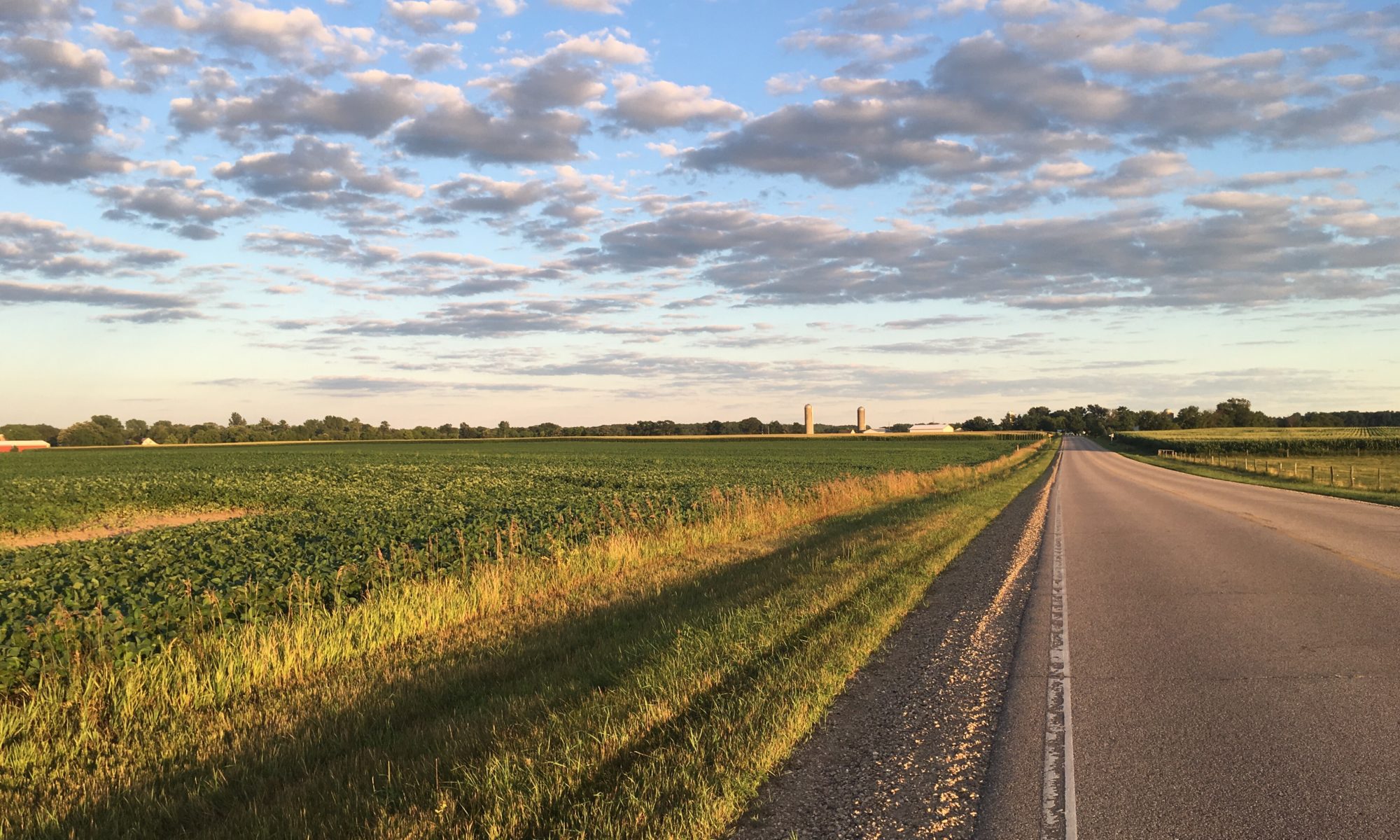
But that’s the funny thing about people who don’t fit into a box. They grow to infiltrate everything, and when they suddenly go missing, they are missing everywhere.
~ from The Unfinished Work of Elizabeth D.
 Without knowing why, or even how, it happens, a person can fill a void in our lives so quickly and settle into our being so fully that, surely, they must know us as well as we know ourselves. Even better. I have such a friend, who can tell at first glance (or at first long-distance “hello” over the phone) if I’m lying or telling the truth when I answer the question, “How are you?” Yet, even through such deep connections, I bet there are things unknown between us. How well can we really know another person?
This question ripples throughout Nichole Bernier’s debut novel, The Unfinished Work of Elizabeth D., as one woman is bequeathed the journals of her deceased friend.
In reading Elizabeth Martin’s most personal thoughts, Kate discovers a side to her friend she hadn’t known or expected. The truth of Elizabeth’s marriage, her friendship with Kate, and her life ambitions unfolds, and, with that truth, so does Kate’s own pain and understanding of her relationships and dreams. In those discoveries, Kate finds strength to face her fears and embrace what’s genuine. This book speaks to the anxiety we so often hold about the future and to the relief we feel in finally letting go.
I’m honored to host Nichole Bernier today as she talks about her book, about life, and writing. I’m offering a giveaway, as well, with three ways to enter: tweet about the post (tag it with @Christi_Craig), post about the interview on Facebook (message me here so I count your entry), or – the most simple route – just leave your name in the comments. Come Tuesday, August 14th, you could be the winner of a copy of Nichole’s wonderful novel.
And now…welcome, Nichole!
CC: In your novel, Elizabeth’s journals act as a conduit of self-reflection for the protagonist, Kate, as Elizabeth reveals her own angst and struggles with motherhood, work, and relationships. Some of what Kate learns about herself is unexpected, and painful (and, boy, can I relate to what she discovers and how she feels). Have you ever had that experience, seeing yourself through someone else’s eyes?
 NB: I was about to answer no, but then I remembered an email I received a few months ago. It was from a woman who’d been in my graduating class at journalism school, and had heard I was about to publish a novel I’d written while I was in the thick of the child-raising years. She contacted me because she was starting to write one, herself, and had just had her second child. We exchanged memories about school, and she recalled — ha ha! — how at a graduation party she had told me she was taking an unpaid internship. Apparently I said, You can do better.
I’d like to think she’s remembering a little incorrectly, and that I actually said something along the lines of, WE can do better. Because heaven knows I made poverty-level wages that year after school. Or that I said it in an emphatic, affirming way — You can do better! Someday, we all will!
But I don’t know what I said, or exactly what I meant. I don’t even remember the blur of graduation week very well, capping a rabid year working toward a degree that was not technically necessary for our field. All of us, subliminally haunted by the pressure to prove it had been worth it. I only know that that’s what her perception was, and that’s what matters in the end, really. But that thankfully, she didn’t take it badly enough that it kept her from reaching out 20 years later to a fellow mom who’s still just trying to do better.
CC: In the acknowledgements, you mention an island cottage that inspired the one in the novel, where Kate reads Elizabeth’s journals. Were you able to sneak away for a writing retreat at that cottage while working on book? And, where do you do most of your writing now?
NB: Oh, I was sneaking away whenever I could. Well, if you can call it sneaking when you kiss five kids goodbye a million times each — whether you’re going away for two hours or two days — and you sneak off after a very orchestrated hand-off to a generous husband who you’ll probably text with five minutes after you leave. Not very stealthy.
But no, I wasn’t able to steal away to that cottage. It’s someone’s primary home except for two weeks in the summer. And it doesn’t actually have that attic loft, sadly. That was an embellishment of my imagination. Though it sure would be nice if they added it, and then let us rent again someday.
As far as my writing space at home is concerned, I sort of wish I had a writing room, some serene window-walled space with a massive antique desk. But even if I did, I probably wouldn’t write there. Our house is never really quiet because we have five kids, and though I don’t need quiet to write, I need the noise to be sounds I’m not emotionally invested in.
So I’ve become that cliché of the coffeeshop writer. I love the impersonal bustle that’s a bit like being part of an office, the juicy bits of conversation you overhear, and yes, the constant flow of coffee and inability to hop up and tweeze your eyebrows. When I need real quiet, I go to the library.
CC: I love what you say in this post on your blog, how writing a novel can sometimes be a cathartic experience. I know that feeling, when a story rushes out and brings with it every inch of pain that’s been held in by grief. You also say that you never imagined yourself “as someone with a novel inside her, but now [you] can’t imagine [yourself] without it.” Do you have another novel in the works?
NB: There are two things I’m obsessed with these days. One is a disturbing premise set in the former Soviet Union. The other takes place on an eerie forbidden island I visited with the Park Service a few months ago, a real-life fascinating and creepy place that spans three distinct phases of history. Once my book tour quiets down I’ll be going to town on one of these stories, whichever one is keeping me up at night the most.
CC: What are you reading these days?
NB: I just finished Gone Girl — which had such exciting use of voice and tension created by unreliable narrators — and Salvage the Bones, a Katrina story about four motherless siblings that knocked me flat. Right now I’m in that hang-time between books, and since I’m on book tour, am traveling with a combination of things to pick up during flights – a hardcover, a galley, and my iPad. The ability to sample first chapters electronically is like a literary buffet, a moveable feast (at least until your battery wears out).
CC: What advice do you have for writers on the rise?
NB: You have to make your writing the absolute best it can be, and find folks who will help you get it there. Find a handful of like-minded writers who will be supportive and honest. Then revise, revise, revise.
When you’re ready to send it out into the world, do your homework. It’s so easy now to learn about agents and editors and the query process with all the resources online. On Twitter, for example, you’re hearing query preferences and pet peeves right from the horse’s mouth.
Network on social media. Write essays, articles, blogs, clever email, anything that’s a limbering-up exercise to keep your thinking process sharp and your creativity going and your voice out there. Then get thick skin and be persistent and find a way to keep up your stamina through the rejections. You’re not rejected until you’re rejected a LOT. There are as many reasons for rejection as there are Eskimo names for snow. You just have to find that one agent and editor with whom your story resonates, and who can bring it out to the world.
Nichole Bernier is author of the novel THE UNFINISHED WORK OF ELIZABETH D, and has written for magazines including Elle, Self, Health, and Men’s Journal. A Contributing Editor for Conde Nast Traveler for 14 years, she was previously on staff as the magazine’s golf and ski editor, columnist, and television spokesperson. She is a founder of the literary blog Beyond the Margins, and lives outside of Boston with her husband and five children. She can be found online at nicholebernier.com and on Twitter @nicholebernier.
Don’t forget to enter the giveaway, through a comment, Twitter, Facebook (or all three). Look for the announcement of the winner on Tuesday, August 14th.
If you like what you see, click here to subscribe to weekly blog updates on christicraig.com


