Favorite Lines & This Month’s Writing Prompt

Saturday marked another hour with my writing friends at the retirement center, reading stories and laughing about gaps of knowledge between generations. There was a story read about a young woman, and letters to a soldier overseas during World War II, and V-mail. “What’s V-mail?” I asked, to which I got the same reaction I gave my niece once when we stood in the library and she dared to say, “what’s a card catalog?” Mouths fell open and someone said, “Oh. You’re so young.”

We have fun around the table.

And, what I love most about meeting up with these folks each month is their excitement at being there, even when, as I found out, last month’s writing prompt proved more of an obstacle than inspiration. Maybe there were too many choices. Maybe the prompts weren’t quite clear. Maybe they just didn’t click. Sometimes prompts are like that, but writers tackle them anyways.

And, that’s exactly what they did: they wrote anyway.

Favorite Lines

One of my favorite phrases came from a woman who’s been writing flash fiction. In her piece, she described an apartment ever so briefly but quite clear: with landlord-tan walls and scuff-board floors. That’s all I needed to see an exact image. Another favorite line came from a different story, written by a gentleman in the group, about a visit to an attic: You knew right away from the musty, stuffy smell, that you were about to reach the third floor destination. That’s immediate recall for me, the attic smell that lures you to the door and begs you to step inside. We talked about that, too, about how certain descriptions like that do more for a piece (and the reader) than just saying something is “old” or an apartment looks  “run down.”

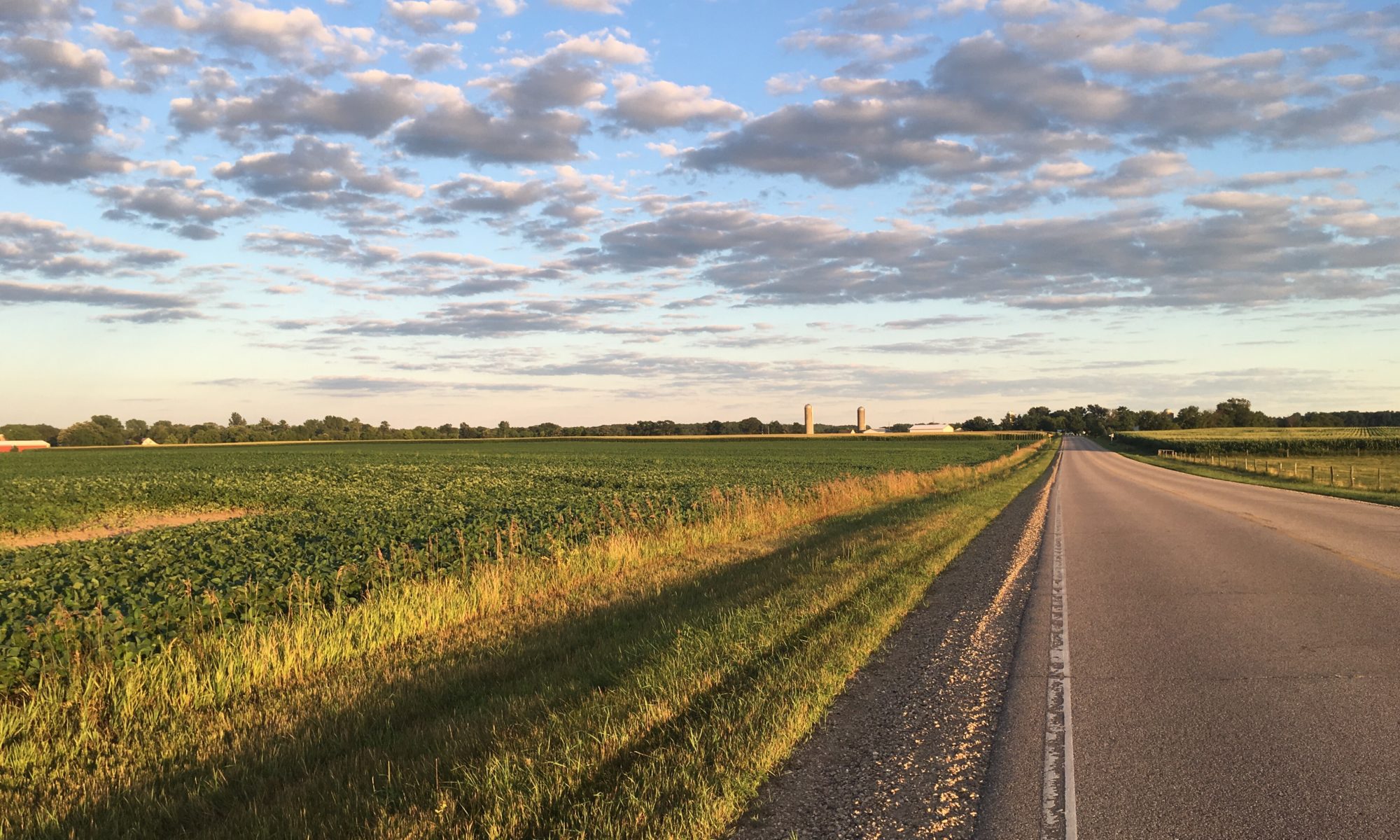
We meet again in September at a time when we will be crossing into Fall, waking up to crisp mornings and watching the sun set a little too soon in the evening. This month’s writing prompt focuses on two quotes, by Natalie Goldberg and Russell Baker, and asks us to look back, then, on the season of summer.

The Prompt

Memoir doesn’t cling to an orderly procession of time and dates, marching down the narrow aisle of your years on this earth. Rather it encompasses the moment you stopped, turned your car around, and went swimming in a deep pool by the side of the road. You threw off your gray suit, a swimming trunk in the backseat, a bridge you dived off. You knew you had an appointment in the next town, but the water was so clear. When would you be passing by this river again? The sky, the clouds, the reeds by the roadside mattered. You remembered bologna sandwiches made on white bread; you started to whistle old tunes.
~ Natalie Goldberg, Old Friend from Far Away

This paragraph from the introduction in Natalie Goldberg’s book on writing memoir not only talks about the way we remember, it also hints at summer. It’s late August. Three hours north of here, the leaves show signs of weathering. The tomato plants in my garden have grown wiry, so that nothing is left on the vine but a few remnants of (what could have been) prime fruit. My kids won’t turn any more tan or earn one more freckle; the sun sits too low on the horizon. Swim goggles have been broken or lost; one last romp at the pool leaves my son red in the eyes and full of heavy yawns. It’s time.

Time to move on to what comes next. We let go, of cool June nights and unbearable July days, of too much time at the pool or not enough days spent at the lake, of excitement in new endeavors and grief in goodbyes to a close friend. We move on, but memory stays with us.

Ah, summer, what power you have to make us suffer and like it.
~Russell Baker

Tell us about one summer when the suffering was worth it. Or maybe it was a summer when the suffering ceased.

* Photo credits: alvimann and melodi2 on morguefile.com.

Like what you see? Click here and subscribe to weekly blog updates from Writing Under Pressure.

Rob Riley, on Finding Our Way to Writing

Today, I welcome Rob Riley, whose book, Portrait of Murder, was released by Orange Hat Publishing in February 2012. Rob shares about the journey to becoming Writer, Author.

20120818-222953.jpgThe instinct to write novels has been within me since my earliest memories. It didn’t take form for a long time. I was a sports fanatic – football, baseball, basketball, high school letterman’s club. Academics? I didn’t even know how to spell the word until well into adulthood. (I kid; had that one nailed by age 20, at the latest.) But my imagination knew no depths, nor did it ever take a break. I loved all forms of entertainment, played the clarinet, and read books, all when the mood came upon me. Undisciplined? Absolutely. But I was unwittingly planting the seeds of what would eventually be a breakout lunge toward writing crime fiction novels.

It was a circuitous route. At age 19 I became a police aide for the Milwaukee Police Department, became a sworn officer at age 21, and immediately began working as an undercover narcotics agent. Seven hectic years of doing that led to a promotion to detective, investigating major crimes. My supervisors always said that I wrote excellent reports. They actually recruited me to do sensitive investigations because of my skills. Busy though I was, I always found time to read: Faulkner, Hemingway, Steinbeck, Hammett. I was always drawn to classics of that era. And I came to think I bet I could do something like that. I began thinking of my own story ideas.

But I was a police detective, and was making a living. In my early 30’s I investigated the murder of a fellow police officer, and friend. My partner and I arrived on the scene a couple minutes after  his radio call for help. He was dead where he lay, in an abandoned pool hall, as was his killer. We were there for hours, with a dozen additional officers helping us process the scene. You could have heard a pin drop. For me, it was a pivotal moment.

That kind of experience puts gadgets in a budding writer’s toolbox. There were other similar ones during my career, but that was the worst. That one hurt.

During that time – not coincidentally, I later realized – I signed up for a correspondence writing course, writing short stories. I wrote about 20 of them, and some very patient instructors broke me in with line editing, and character and plot development. I got nothing published, but I got more than my money’s worth.

In 1994 I joined a novel writer’s workshop. The instructor was a man of high achievement in both the writing and the teaching worlds. He had 40 novels published. Lived in Dubuque, Iowa. I lived in Milwaukee, Wisconsin. 175 miles apart. I drove to his home and back on one Saturday of each month for the next 13 years. Wrote six complete novels, each one edited by my writing “coach,” (we were not allowed to call him teacher) and critiqued – sometimes almost savagely – by my workshop classmates. None of them were published, although several hundred rejection notices showed that I was trying.

During that time I wrote five days a week, two hours a day. My coach was rigid with his instructions on my schedule. Too much writing at one time will drain you, he said. I did what I was told, and was eventually told that I was “a darn good writer.” Six unpublished manuscripts in your desk drawer leaves you with doubts, but I was determined never to quit.

The first three books were supernatural thrillers. Who could have figured that? It was simple. I was still a cop, and I needed an escape. And I’d always loved horror books and movies. Good ones, not the modern day hacker/slasher type. When I retired from the police force in 2001 I switched to my bailiwick, police procedural fiction. Crime mysteries, to be exact. The change had been unexpected: One day I began reading Raymond Chandler’s The Big Sleep, a story about Philip Marlowe, a cynical, wise acre detective telling a first person account of how come and why he was so cynical, and such a wise acre. That was all it took.

I switched genres. The next three books are about private investigator Jack Blanchard, a former Milwaukee police detective who left the department in a huff, to do his own, lone wolf style investigating of myriad legal matters.

Portrait Of Murder.
Dead Last.
Unto The Father.

Portrait Of Murder was published earlier this year. The next two are patiently waiting their turn.

Rob Riley lives with his wife, Mary Lynne, in southeastern Wisconsin. He spent thirty-two years as a Milwaukee police officer: seven years doing undercover narcotics investigations and twenty-two years as a major crimes detective. Writing and reading have been lifelong passions, and he began by writing short stories more than thirty years ago. Of course, police work provided both the inspiration and insight for his PI mystery novel, Portrait Of Murder. Two additional novels in a series that features his main character, Private Investigator Jack Blanchard, have been completed. The author may be contacted at  rob.riley101@yahoo.com.

About the Book:
PI Jack Blanchard is hired by his close friend to find his missing sister, who has a long history of drug addiction. Blanchard has little trouble finding her, but subsequently becomes entangled in an investigation that links the past murder of her drug dealer; the current murder of a top City Official – and a mind bending expanse of government corruption that involves the police department, and leads directly to the Mayor’s office. With disparate sources providing help – a prison inmate who had been an eye witness to key events, and Juanita Velez, head of the Social Services Department – PI Blanchard comes upon a twisted tale of criminal behavior and multiple murders, and a shocking conclusion that no one could have anticipated.

Portrait of Murder is available for purchase on Amazon in paperback or on Kindle.

Like what you see? Click here to sign up for weekly blog posts from Writing Under Pressure via email.

The Stories that Haunt Us


In less than a week, I turn 42 years old. Forty two. I don’t mind it, really. I have much for which I can be grateful for and plenty to look forward to this coming year.

There are days, though, when I feel pulled back, when my mind sifts through memories like old recipes, and I become stuck in images of me at twenty-one or my life at twenty-two.

I am swirling through a warm summer in Oklahoma; walking barefoot in the red dirt by the river; taking in a cool night on top of a roof; sitting on the wood floor of that house we rented, playing records we found at the thrift store. There are communal meals – an Eggplant Parmesan dish that took four people and six hours to bake – and quiet bike rides alone, in the early morning hours, to open the bakery where I worked.

My time there ran its course, yet I return, again and again, searching for something. Unable to let go.

Those are the memories that filter their way into stories. They fall clunky and raw onto the page, are taken apart and molded back together again, three or four (or five) times over. The stories wax and wane in how much is revealed, and then, finally – because they are still too much or not enough – they get put into a drawer. Pushed to the way back.

And, those are the stories that refuse to lay dormant.

I have such a piece that keeps bucking its way to the rewrite table. One minute I love the story; the next, I cringe at the thought of anyone reading it. Still, I can’t let it go, can’t stop rewriting. I’ve taken out truths and replaced them with fiction. I’ve changed names and changed them back again. I’ve left out the parts of me that burn.

This story needs a place, whether it’s a permanent station in a notebook no one will find for years to come, or…who knows. I put it through the chopping block yesterday, and I’m giving it one last showing tomorrow, under fresh and experienced eyes at a critique group. After that….

I’ll be honest: I’m scared.

How do you tame the stories that haunt you?

If you like what you see, click here to receive weekly blog updates.